Every RV owner eventually asks the same question: how much battery do I actually need? Buy too little and your trip ends with a dark fridge. Buy too much and you spend money on capacity your charging system can never refill.
This guide does the real math. No marketing fluff — just amp-hours, runtime estimates and honest trade-offs, using the four most common 12.8V LiFePO4 bank sizes: 200Ah, 314Ah, 628Ah and 942Ah.
Battery sizing starts with your daily energy budget. Take each appliance, estimate how many hours per day it runs, and convert watt-hours to amp-hours at 12.8V (Ah = Wh ÷ 12.8).
| Typical RV load | Power draw | Hours/day | Ah used @ 12.8V |
|---|---|---|---|
| 12V compressor fridge | 45W (cycles) | 24h | 45–60 Ah |
| LED lighting | 10W | 5h | 4 Ah |
| Water pump | 60W | 0.5h | 2.5 Ah |
| Roof vent fans | 20W | 6h | 10 Ah |
| Diesel/air heater | 40W (cycling) | 10h | 15–20 Ah |
| Laptops + phones (via inverter) | 50W | 4h | 17 Ah |
| Microwave (via inverter) | 1,000W | 0.25h | 23 Ah |
Real-world totals: a weekend RVer without air conditioning lands around 80–120Ah per day. A full-timer running an inverter all day lands at 150–250Ah per day. Write your own number down — everything below depends on it.
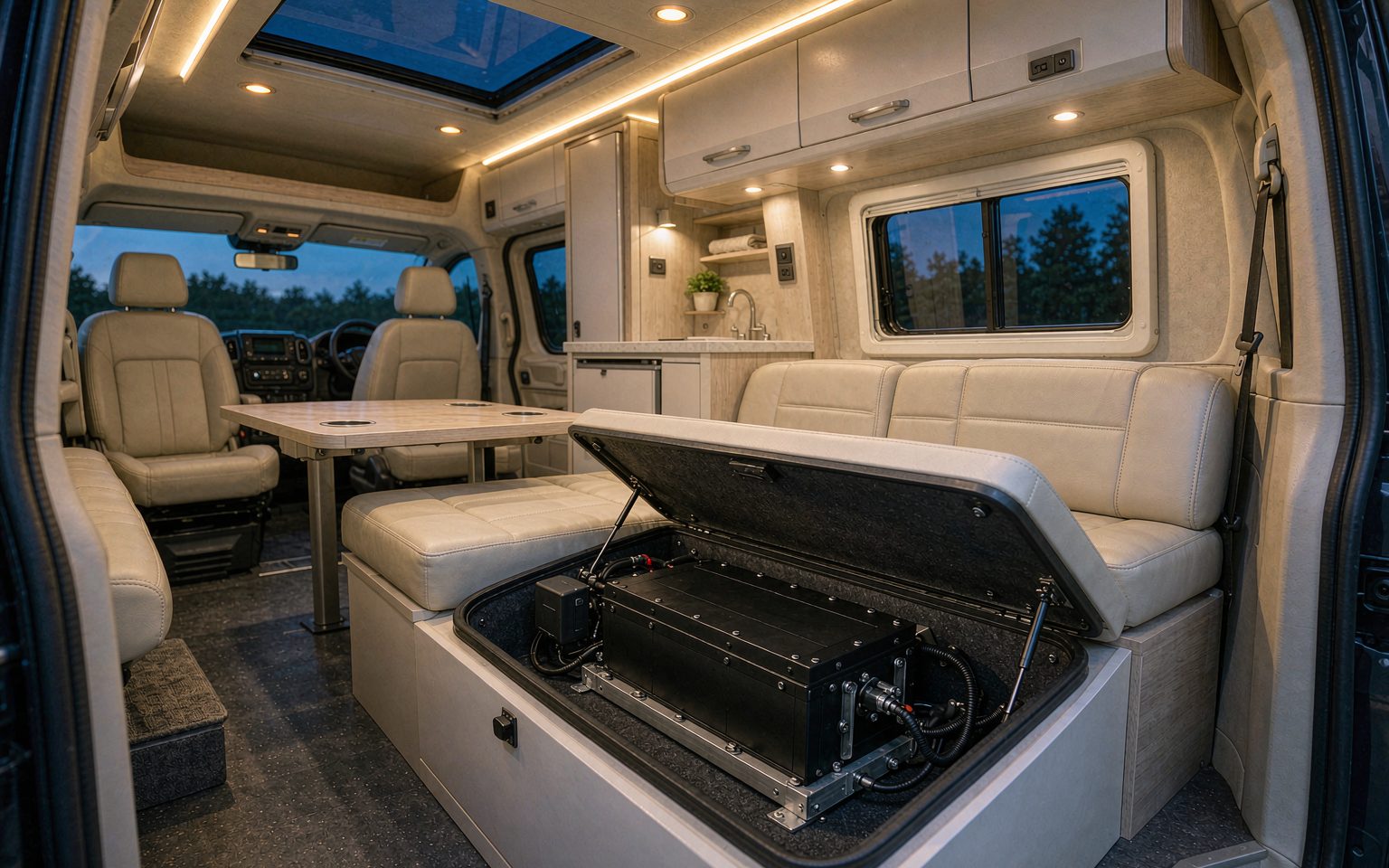
Nameplate amp-hours are not what you can actually use:
This is why a 200Ah LiFePO4 battery comfortably replaces 400Ah of AGM. If you’re still comparing chemistries, see our full LiFePO4 vs AGM vs gel comparison.
| Bank size | Usable energy | What it realistically supports |
|---|---|---|
| 12.8V 200Ah deep cycle battery | 2.56 kWh | Weekend trips: fridge, lights, water pump, fans, device charging. Two to three days off-grid with no shore power. |
| 12.8V 314Ah RV battery | 4.0 kWh | The sweet spot for most serious RVers: a full week of boondocking with fridge, heater, fans and daily inverter use — still one battery, no parallel wiring. |
| 12.8V 628Ah RV battery | 8.0 kWh | Full-timers and big rigs: everything above, plus short bursts of 13.5k BTU air conditioning (1.5–2h) or long microwave/induction use. |
| 12.8V 942Ah RV battery | 12.0 kWh | Extreme off-grid: multi-day air conditioning, work rigs and mobile offices with heavy inverter loads, or banks feeding large solar arrays. |
A quick sanity check with the fridge math: a typical 12V compressor fridge consumes about 1 kWh per day. A 314Ah bank (4.0 kWh) therefore runs the fridge alone for roughly 4 days without any charging — which is why it’s the most popular size for boondockers who also carry solar.
Capacity is only half of sizing — current is the other half. A 2,000W inverter at full tilt pulls about 170A from a 12.8V bank. Before buying any battery, check its BMS continuous discharge rating:
Our high-capacity packs (628Ah / 942Ah) are built with high-rate cells and heavy-duty BMS units precisely because large-bank builders asked for it — see the technology page for BMS details.
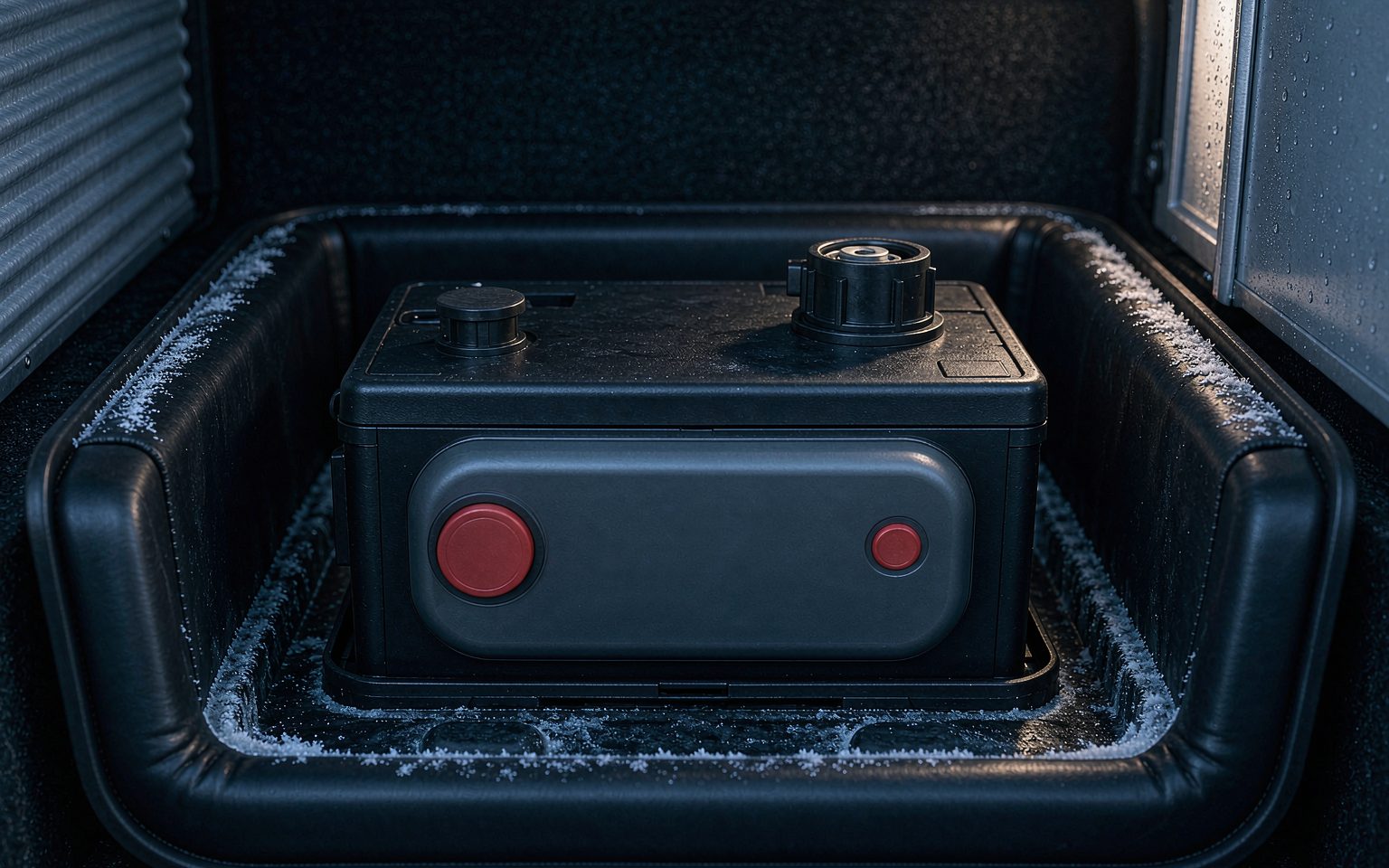
The spec most buyers miss: LiFePO4 cells can discharge in freezing weather but must not be charged below 0°C (32°F). Charging a frozen cell causes permanent lithium plating and capacity loss. Three ways to stay safe:
If you camp in cold seasons, read our complete LiFePO4 RV battery buying guide for the full winter checklist.
Lithium cuts bank weight by roughly 50–60% versus AGM at the same usable capacity. A 400Ah-usable AGM bank (four 6V golf-cart batteries) weighs around 120–130 kg. A single 200Ah LiFePO4 battery weighs about 20 kg and delivers the same usable energy — with no maintenance, no ventilation requirements and no acid.
For RVers, that’s not just convenience: it’s 100 kg of payload back for water, gear and toys.
We don’t recommend it. Batteries of different capacities and ages charge and discharge unevenly, which stresses the BMS units and shortens bank life. Build the bank with identical batteries, bought in the same batch where possible.
A 13.5k BTU rooftop AC draws 1,300–1,800W while the compressor runs — roughly 1.3–1.5 kWh per hour. A 4.0 kWh (314Ah) bank handles 1.5–2 hours per cycle; an 8.0 kWh (628Ah) bank handles an evening comfortably. For all-night air conditioning you’re realistically in 12 kWh territory plus substantial solar.
Only if your charging can refill it. As a rule of thumb, solar should be able to restore most of the bank on a good day (rough rule: 200W of solar per 100Ah of lithium). An oversized bank that never fully charges ends up chronically undercharged and ages faster.
Nice, not essential. A decent shunt-based monitor tells you the same thing. What actually matters is cell quality, BMS protection thresholds and assembly quality — the things you can’t see from outside, which is exactly why we test every pack at 100% end-of-line before shipment.
All four packs above are 12.8V and support up to 4-in-series × 4-in-parallel expansion — from a single battery up to a 48V system with over 1,200Ah of capacity, using identical packs throughout. Keep cabling balanced between parallel strings and fuse each battery’s positive terminal.
Most RVers are happiest with 314Ah: one battery, no parallel wiring, a full week of real off-grid use. Weekend campers can save with 200Ah; full-timers with air conditioning should look at 628Ah and up.
All capacities in this guide are available off-the-shelf from BatteryMora’s product catalog — factory-direct, Grade-A cells, 4,000+ cycle design and a 5-year warranty. Need a custom size, enclosure or BMS configuration for your RV build? We do OEM/ODM from small batches — tour our factory or contact our engineering team with your requirements.
Fill in the form and our sales team will reply with a quote.