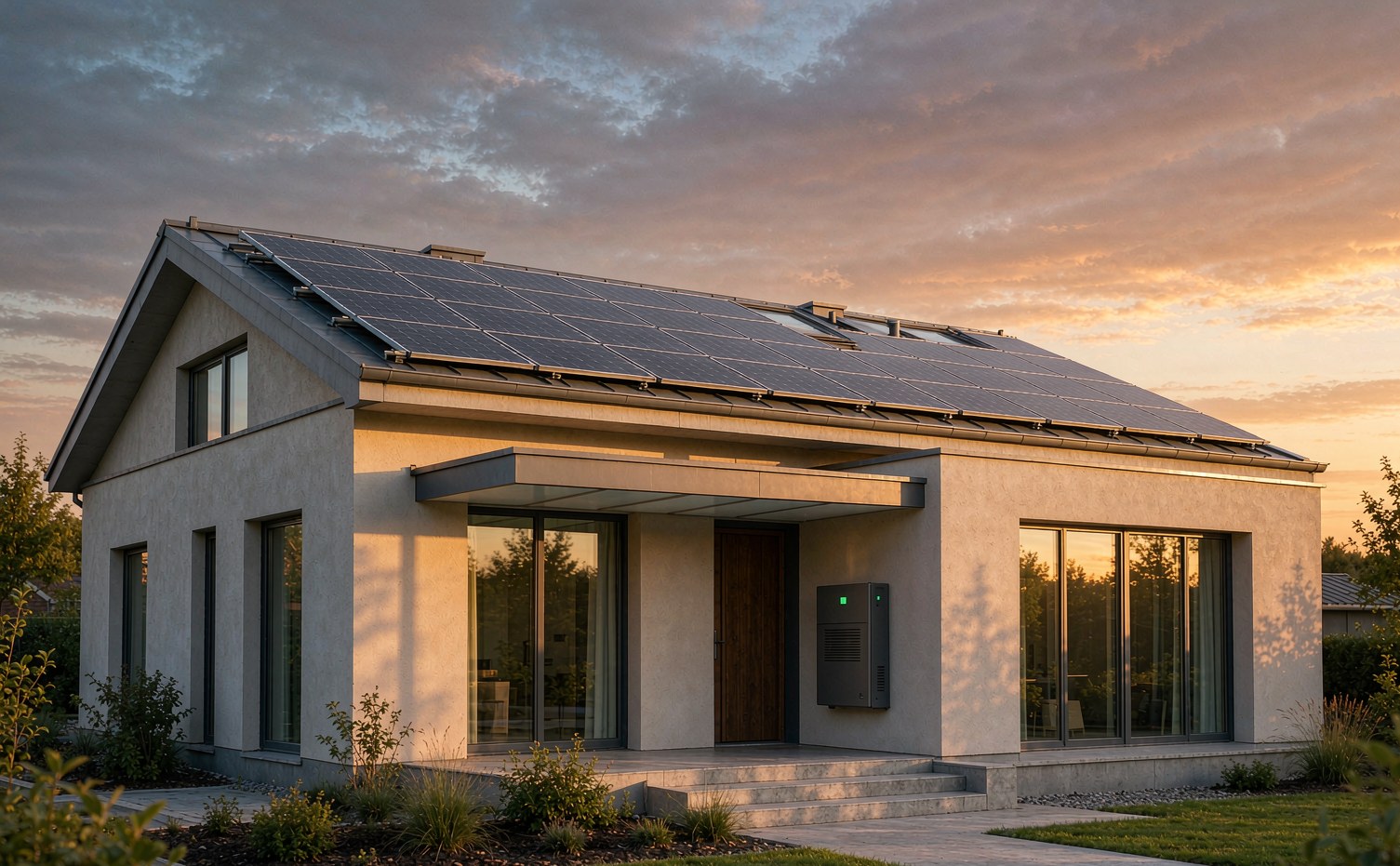
If you’re an installer, a distributor building a home-storage line, or a homeowner planning backup power, one layout question comes up in almost every conversation: wall-mounted battery or vertical (tower) battery? Both use the same LiFePO4 cells and the same BMS principles — the difference is in how the system fits into a building, and how it grows over time.
We build both formats at our factory, so here is the honest comparison we give buyers before they commit a product line to one or the other.
Wall-mounted wins in small spaces. Garages, utility rooms, under-stair nooks — anywhere floor area is precious, a wall module disappears into the architecture. Weight limit is the catch: a masonry or concrete wall handles 30–50 kg modules easily, but drywall needs reinforcement brackets.
Vertical towers need floor footprint but no wall engineering. They sit next to the inverter, which actually shortens the heavy DC cabling run — one of the reasons installers like them for retrofit projects.
For OEM projects, wall-mounted enclosures need stricter tolerance control (the enclosure is visible in the customer’s living space), while towers prioritize thermal management and service access.
This is where the formats genuinely differ:
If your customer’s load may grow (EV charger coming, air conditioning added), the tower format has more headroom.
LiFePO4 cells tolerate heat well but charge cutoffs at low temperature matter (a good BMS handles this automatically). Vertical towers move more air around taller enclosures; wall units sit flat against the wall, so leave a small ventilation gap per the manual. Servicing: towers are easier to access module-by-module, wall units are lighter to remove individually.
Per kWh, tower systems are usually a little cheaper at scale — larger enclosures, shared BMS architecture, fewer mounting parts. Wall-mounted costs slightly more per kWh but saves wall reinforcement and fits projects where a floor unit simply isn’t acceptable. For OEM buyers, MOQ and tooling differences are modest; we produce both lines on the same cell platform, so mixing formats in one product range is common.
Not in the same string. The two formats use different voltage architectures (25.6V vs 51.2V), so each string must stay uniform. A home can have both installed side by side, but they connect to the inverter as separate battery inputs or via separate MPPT/DC channels.
Our 25.6V 100Ah wall-mounted modules support up to 4 in parallel per string (about 10 kWh), following the same BMS grouping rules as our RV batteries. Beyond that, move to a 51.2V tower platform instead of stacking more parallel strings.
No. A proper home tower runs at 51.2V with a communication-capable BMS designed to talk to hybrid inverters (CAN/RS485 protocols), and its enclosure is rated for indoor stationary use — not the vibration spec an RV battery is built for.
For essential-load backup (fridge, lights, router, fans, a few outlets), 5–10 kWh covers an evening plus morning. Whole-home backup with air conditioning usually starts around 15 kWh — which is exactly the 51.2V 314Ah tower’s territory.
There is no universal winner — the layout follows the building, and the building follows the market you sell into. What matters more is the platform behind the enclosure: Grade-A cells, a BMS that protects them, and a factory that tests every pack before it ships.
BatteryMora builds both formats on one 51.2V/25.6V LiFePO4 platform in Guzhen, Zhongshan, Guangdong — 51.2V 314Ah vertical, 51.2V 200Ah vertical, and 25.6V 100Ah wall-mounted modules with OEM/ODM support. Compare specs in the catalog, check our cell and BMS standards on the technology page, or tell us your market and we’ll recommend the format that fits.
Fill in the form and our sales team will reply with a quote.