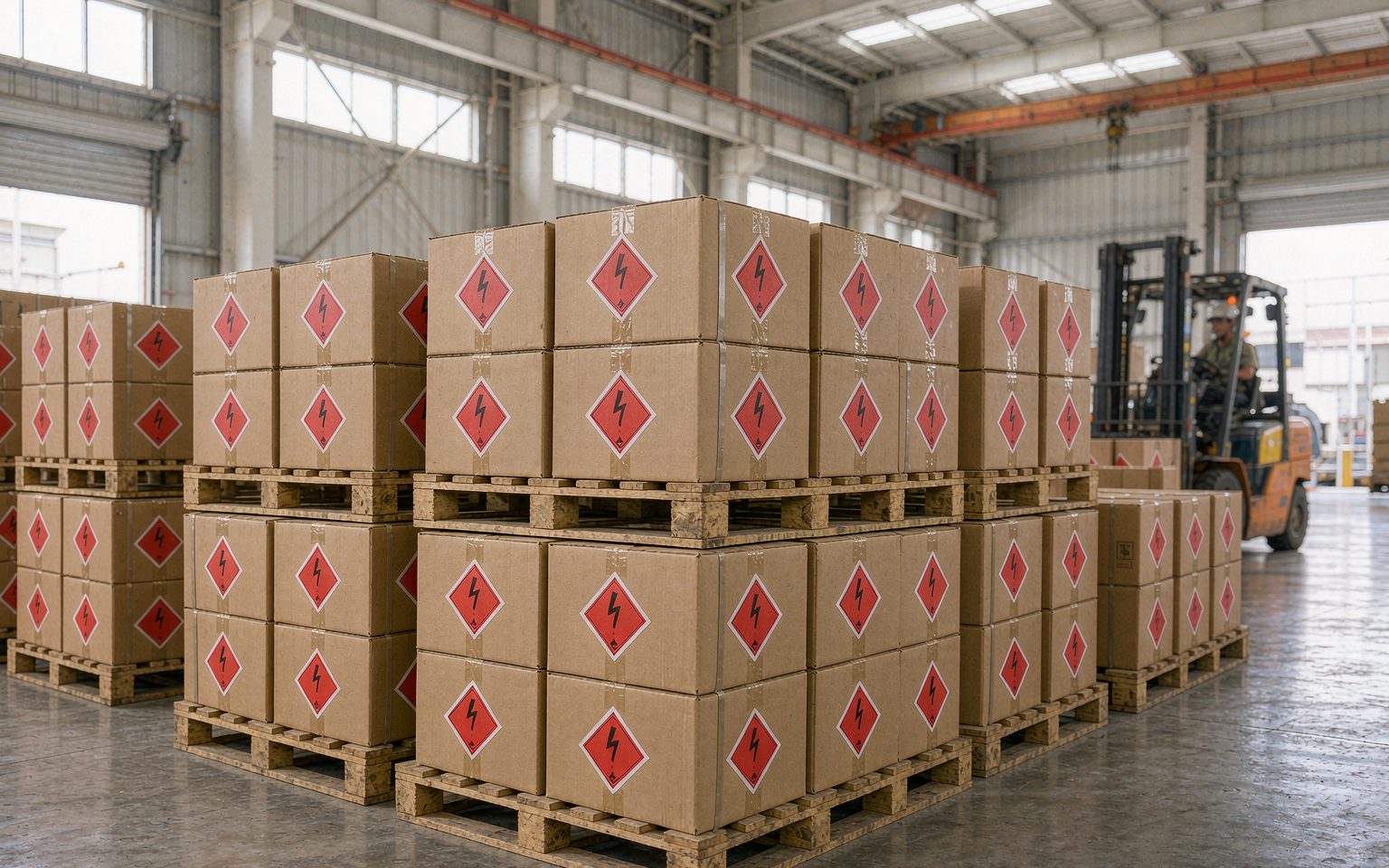
Nothing stalls a first order faster than a container held at the port because the battery paperwork was wrong. Lithium batteries are classified as dangerous goods (Class 9), and every carrier — air, sea, rail or courier — will ask for proof that your cells passed UN 38.3 before they accept the shipment.
This guide explains what the certification actually covers, how LiFePO4 batteries are classified, and which documents a freight forwarder will ask you for. It is written for distributors, RV builders and brand owners importing from China — not for regulatory lawyers.
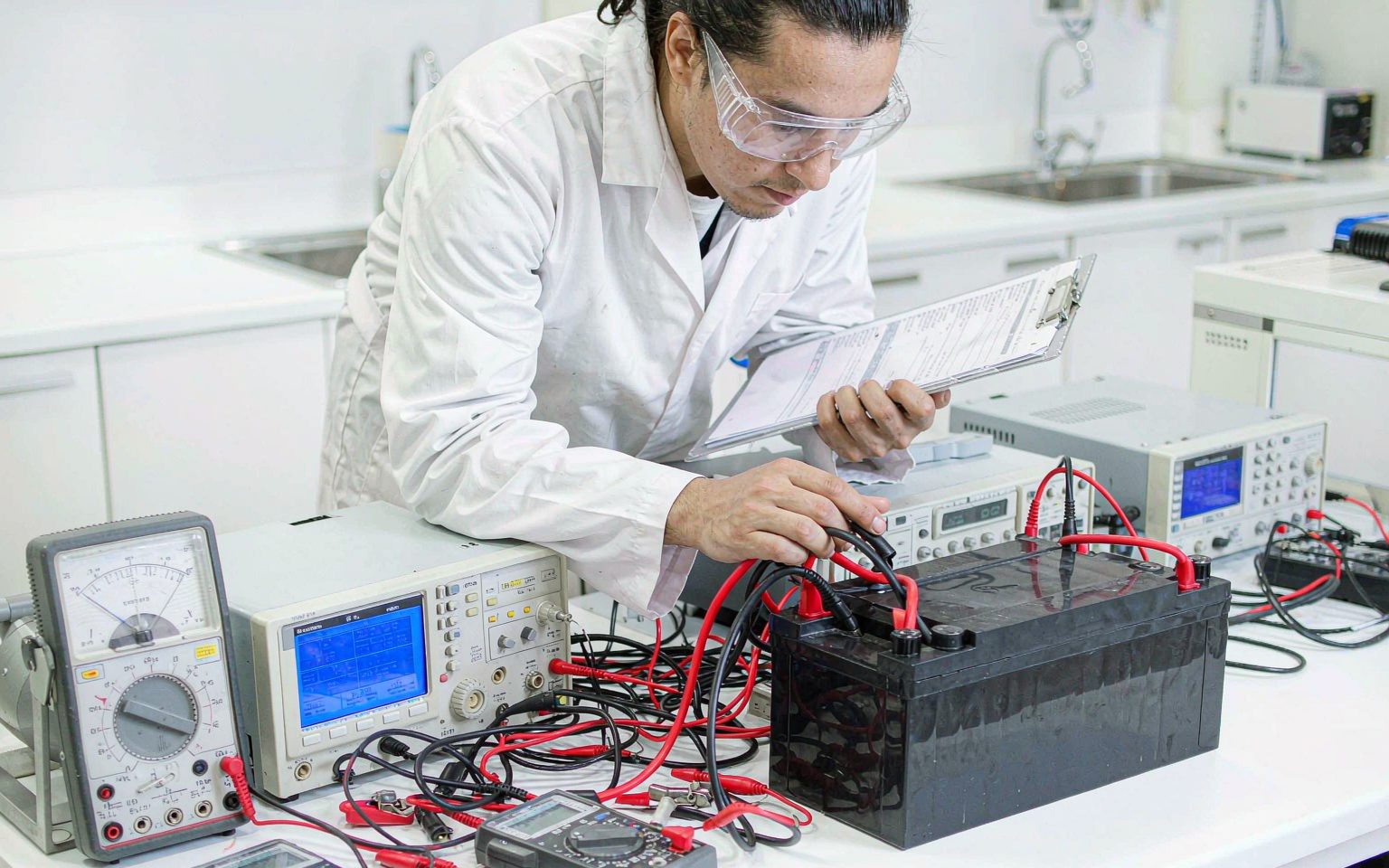
UN 38.3 is a set of eight tests (T1–T8) defined in the UN Manual of Tests and Criteria. A cell or battery must pass all of them before it can be transported:
| Test | What it simulates |
|---|---|
| T1 Altitude simulation | Low-pressure air cargo hold |
| T2 Thermal test | Extreme temperature swings |
| T3 Vibration | Transport vibration |
| T4 Shock | Mechanical impact |
| T5 External short circuit | Short at 55°C |
| T6 Impact / crush | Cell deformation |
| T7 Overcharge | Battery overcharge abuse |
| T8 Forced discharge | Cell reversal |
The output is a test summary (not a “certificate” in the classic sense) issued by the test lab or the manufacturer, referencing the exact cell and battery model. That distinction matters when you verify documents.
How your shipment is declared depends on how the batteries travel:
For air freight, IATA packing instructions apply: PI 965 (UN3480 standalone), PI 966 (packed with equipment) and PI 967 (contained in equipment). Standalone Li-ion cells/batteries shipped by air must be at ≤30% state of charge — a rule that catches many first-time importers by surprise. Passenger aircraft carriage of standalone UN3480 is prohibited; cargo aircraft only.

| Air freight | Sea freight | |
|---|---|---|
| Rulebook | IATA DGR (PI 965/966/967) | IMDG Code |
| State of charge | ≤30% for UN3480 | Generally unrestricted (carrier rules apply) |
| Speed / cost | Days, expensive | Weeks, economical for volume |
| Typical use | Samples, urgent replenishment | Production orders, palletised batteries |
For a new OEM project, the usual pattern is: samples by air (small quantity, ≤30% SoC), then volume by sea once the product is approved.
No. UN 38.3 is a transport safety test required to move the goods. CE / UL / IEC 62133 are market access or product-safety certifications. You may need both — they are issued by different bodies and answer different questions.
The report itself has no fixed expiry, but it is only valid for the exact cell/battery model and revision tested. Any change in cell supplier, BMS or enclosure design means a new test. Many carriers additionally reject reports older than 1–2 years, so keep a current version on file.
Yes — as cargo, under PI 965 (standalone) at ≤30% state of charge, or packed with / contained in equipment under PI 966/967. They cannot travel on passenger aircraft as standalone UN3480. Air freight is significantly more expensive, which is why samples go by air and volume orders by sea.
Legally the shipper (the party offering the goods for transport) — in practice your freight forwarder prepares it using the data you supply. A factory that ships batteries every week will hand you the completed document pack, which is exactly what we do.
UN 38.3 is not a formality you can leave to the last minute. Work with a supplier who ships lithium batteries routinely, hands over a model-matched test summary and MSDS, and knows the difference between PI 965 and PI 967. It is the difference between a container that clears the port and one that sits on the quay accruing storage fees.
BatteryMora builds 12.8V 200Ah–942Ah LiFePO4 batteries and portable power stations in Guzhen, Zhongshan, Guangdong, with Grade-A cells, 100% end-of-line testing and full UN 38.3 / MSDS documentation on every shipment. See how our factory and quality process work, or contact our team for the compliance documents for a specific model.
Fill in the form and our sales team will reply with a quote.