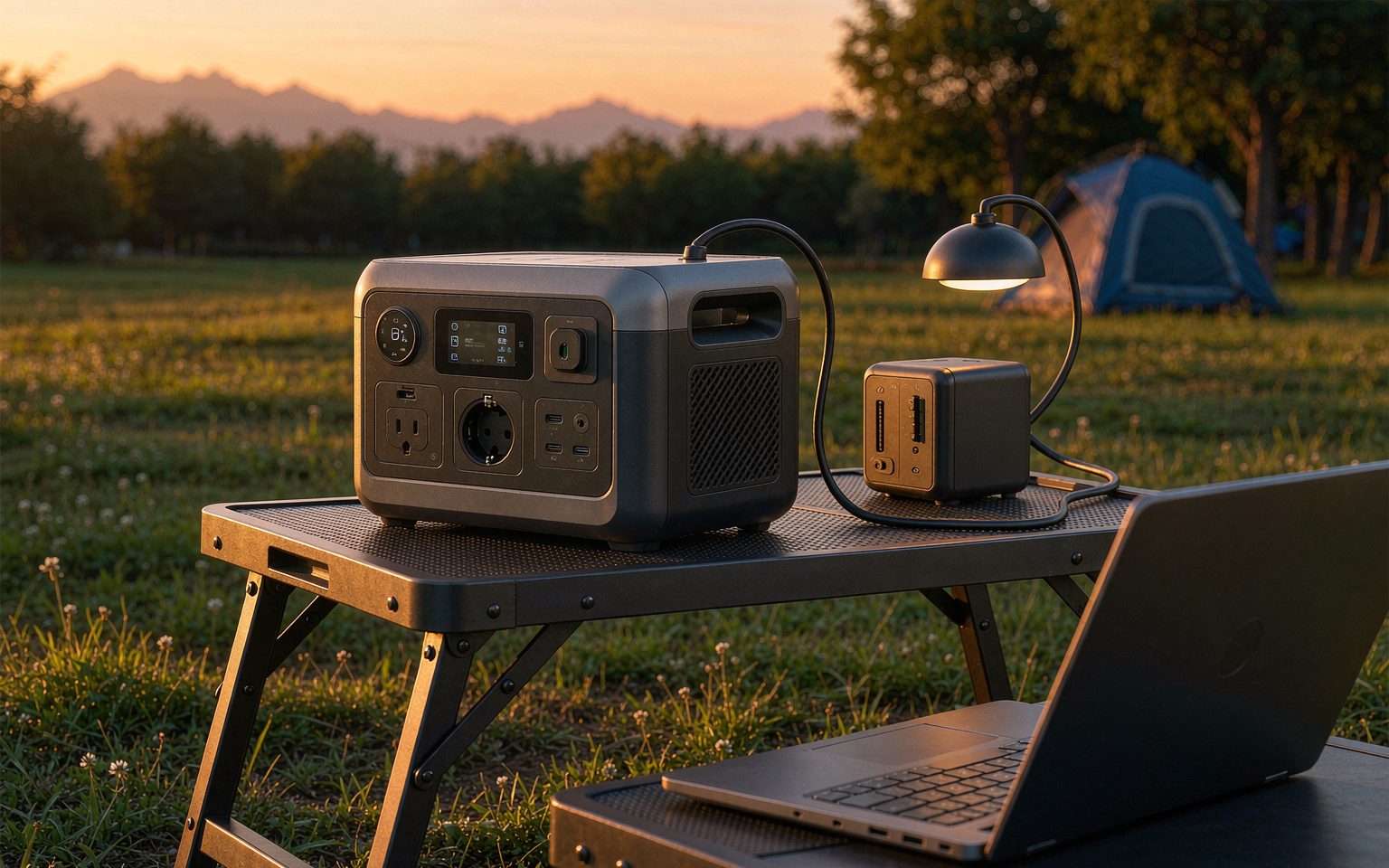
Portable power stations have gone from niche camping gear to one of the fastest-growing product categories in outdoor and emergency equipment. But listing pages are full of numbers — 384Wh, 300W, PD 65W, MPPT — and few sellers explain what they actually mean. This guide breaks the specs down so you can match a model to real-world use, whether you are equipping a retail line or sourcing units for your own brand.
Capacity is measured in watt-hours (Wh): voltage × amp-hours. A 12.8V 31Ah LiFePO4 pack stores roughly 384Wh. In practice that means charging a phone 15-20 times, running a 45W car fridge for a full day, or powering LED lighting through the night. As a rule of thumb, divide the Wh rating by your device’s wattage to estimate run time — then discount about 15% for inverter losses.
The AC inverter decides what you can plug in. A 300W pure sine wave unit covers laptops, drones, cameras and small fans; 600W adds kitchen appliances and most power tools; 1,200W and above runs kettles, microwaves and job-site equipment. Check that the output is a true pure sine wave — modified sine wave output can overheat motors and damage sensitive electronics.
Three inputs matter. Solar input (ideally MPPT, 22-26V open-circuit range) keeps the unit topped up off-grid. Car charging through the 12V cigarette port helps on the road. And USB-C PD is now the everyday workhorse — 65W PD can fast-charge laptops directly from the station. Units that accept all three, like the CY-1200W-02, give the most flexibility.
The battery cells and the battery management system (BMS) determine safety and lifespan. LiFePO4 chemistry typically delivers 2,000-4,000 cycles at 80% depth of discharge — far beyond NCM lithium or lead-acid. Look for grade-A cells, temperature protection, over-current and short-circuit protection, and a BMS that balances cells during charging.
| Use case | What matters most | Suggested model |
|---|---|---|
| Camping & travel | Light weight, 300W AC, Bluetooth speaker | CY-HY-300W |
| Job sites & emergencies | 1,200W output, LED lighting, fast solar charging | CY-1200W-02 |
| Events & overlanding | 1.4kWh capacity, trolley design, 600W solar input | CY-LG-2000W |
Most portable power stations on the market are built by a small number of OEM factories in China. Buying factory-direct means better pricing at volume, custom branding (logo, housing color, packaging), and direct engineering support. Browse the full product catalog or contact us for OEM quotes — minimum order starts at a single unit on most models.
Fill in the form and our sales team will reply with a quote.