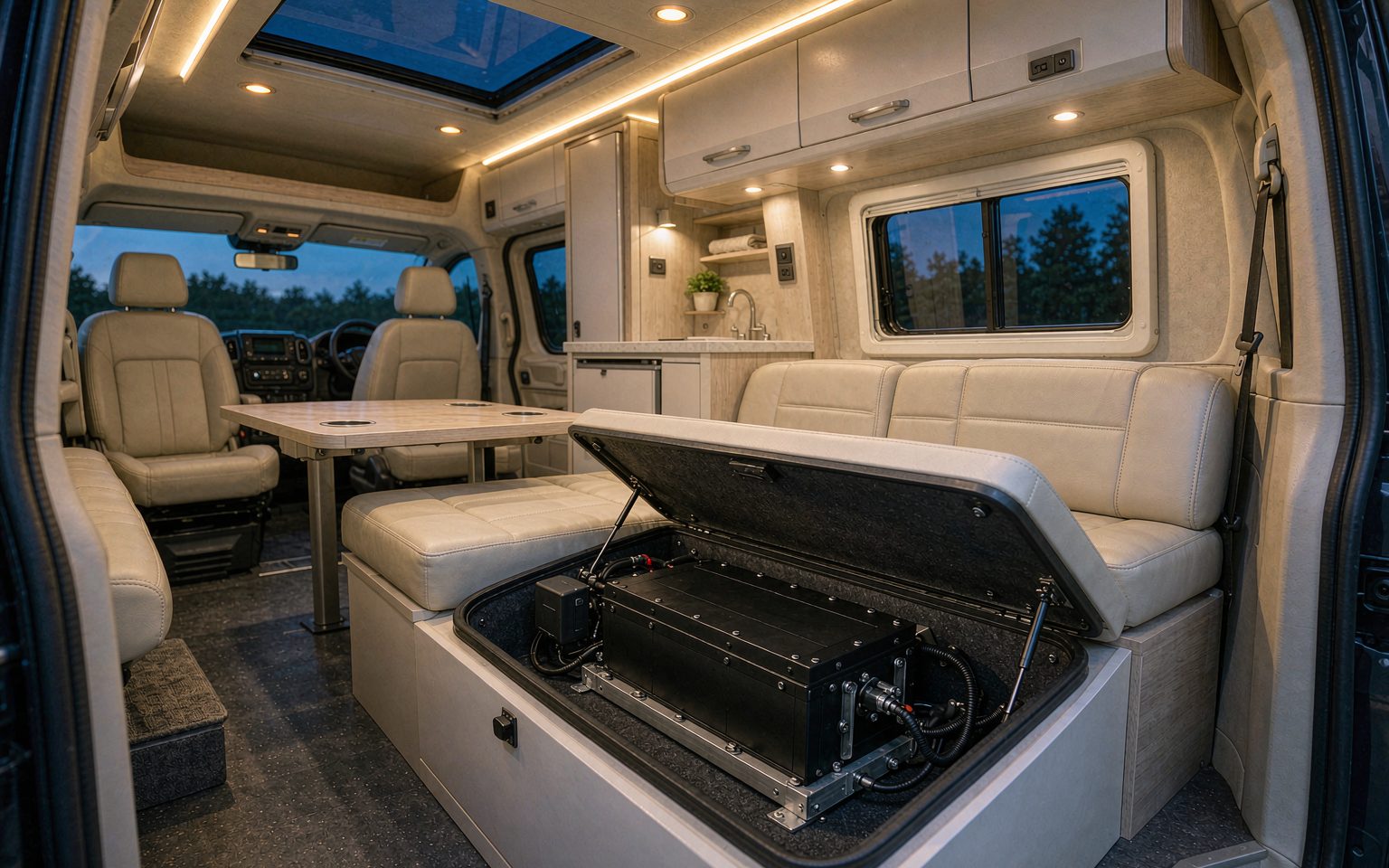
Choosing a lithium battery for your RV, camper or motorhome used to be simple — everything was lead-acid. Today, LiFePO4 (lithium iron phosphate) is the default recommendation, but not all LiFePO4 batteries are equal. This guide walks you through exactly what to check before you buy, whether you are upgrading a single battery or speccing a full system.
List every load you plan to run and for how long. A typical weekend setup (LED lighting, 12V fridge, water pump, phone charging, inverter for occasional microwave use) consumes roughly 60–100 Ah per day at 12V. Full-time off-grid use with air conditioning or induction cooking can exceed 200 Ah per day. Your usable battery capacity should cover at least two days without solar recharge.
Popular sizes: 12.8V 314Ah RV battery for serious off-grid use, 12.8V 200Ah for weekenders, and 12.8V 628Ah for full-time living or mobile workshops.
The Battery Management System is the brain of the battery. A quality BMS should offer:
Ask whether the battery uses Grade-A cells from a named manufacturer and what cycle life is claimed. Reputable LiFePO4 packs deliver 3,000–6,000 cycles at 80% depth of discharge — roughly 8–15 years of RV use. Deals that look too cheap usually use salvaged or B-grade cells.
LiFePO4 weighs about half of an equivalent AGM battery. A 314Ah lithium unit weighs around 30 kg versus 70+ kg for lead-acid of similar usable capacity. Check the terminals (M8 bolts are standard), whether the case is IP-rated for battery bay conditions, and that your alternator or DC-DC charger supports lithium charging profiles.
Look for a minimum 5-year warranty and a supplier who answers technical questions before the sale. Factory-direct suppliers like BatteryMora offer OEM/ODM customization, so you can order the exact voltage, capacity, casing and Bluetooth app your market needs.
Still deciding? Browse the full RV & deep cycle battery catalog or request a quote — our engineers will size the pack for your application free of charge.
Fill in the form and our sales team will reply with a quote.