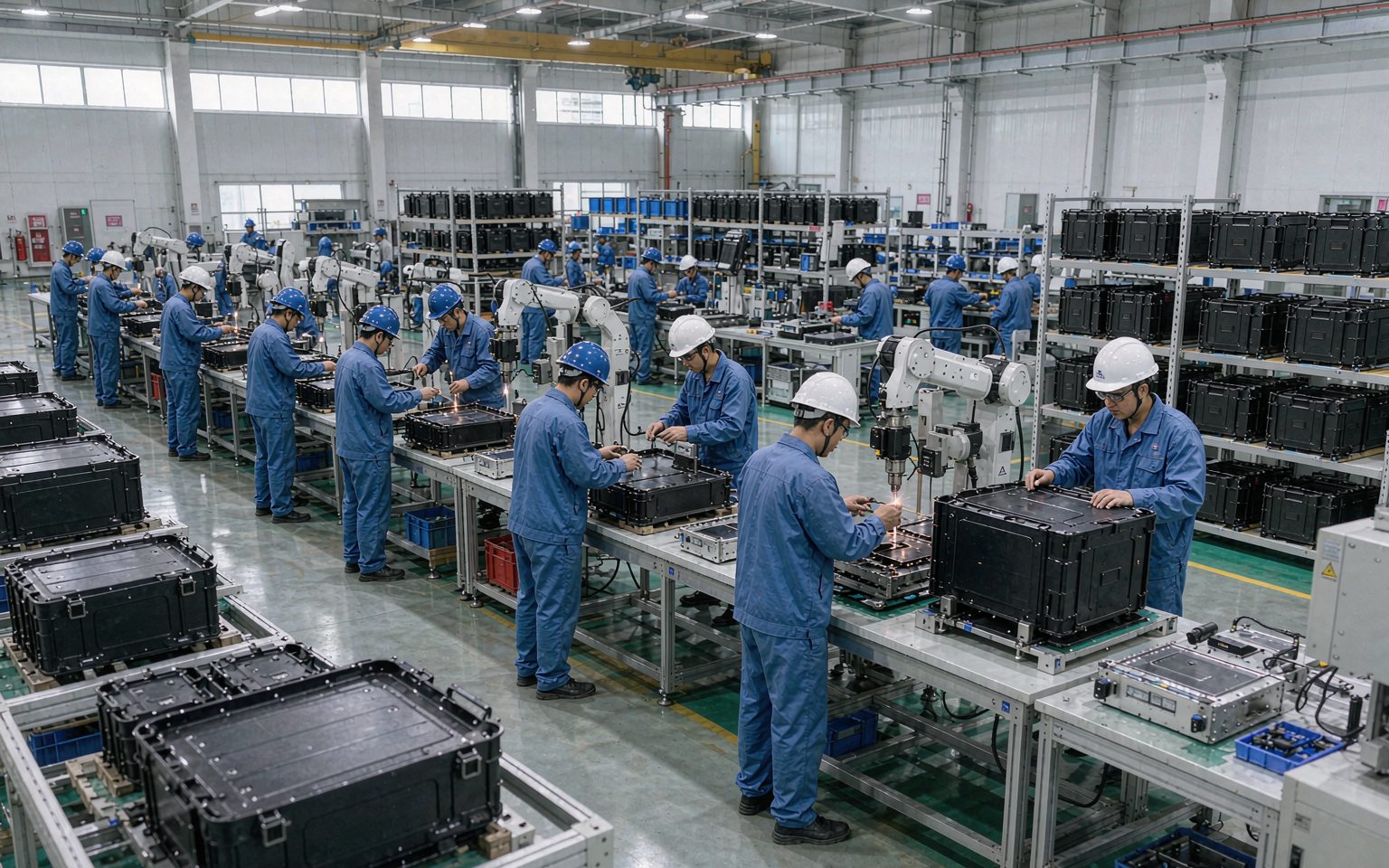
When you source LiFePO4 batteries under your own brand, the factory you choose matters more than the spec sheet. Two packs with identical ratings can behave very differently after a year in the field. Here is a transparent look at how BatteryMora builds its battery packs — and a checklist you can use to audit any supplier, including us.
Everything starts with the cells. We use grade-A prismatic LiFePO4 cells sourced in fixed batches, with incoming inspection on capacity, internal resistance and self-discharge. Cells are matched into groups so that every pack starts balanced — mismatched cells are the root cause of most premature pack failures.
Cells are assembled with laser-welded nickel busbars rather than hand-soldered tabs, then paired with a smart BMS that handles cell balancing, over-charge, over-discharge, over-current and short-circuit protection, plus temperature cutoffs. BMS parameters are calibrated per pack design — a 314Ah RV battery has very different charge profiles from a 19.2V power station pack.
Each pack goes through formation cycling and capacity grading before it ships. Sample packs from every batch also undergo vibration, drop and high/low-temperature testing. This is where factory-direct buyers gain: you can request the test data for your actual batch instead of trusting a datasheet.
As a factory, we support OEM work at several levels: printed or laser-etched logos, custom housing colors (our portable power stations, for example, ship in green, orange or your own color), capacity and voltage configurations, custom packaging, and even firmware details such as display language. MOQ for customization starts small — talk to us before you assume it needs thousands of units.
The best OEM relationships start with engineering questions, not purchase orders. Tell us your application — RV, marine, solar storage or portable power — and we will recommend a pack design with honest trade-offs. Reach us through the support page, or explore proven models such as the 12.8V 314Ah RV battery to see real factory-built packs.
Fill in the form and our sales team will reply with a quote.